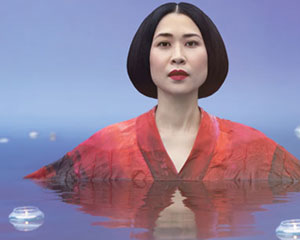
 There is something about the look and sound of white linen as it flickers in the breeze. It creates such an innocent and calming feel. It is dimly lit as materials float, hung from the rafters, and masked individuals quietly walk the stage. This is the opening of a visually and sonically spectacular production of Madama Butterfly, currently playing in the Opera House. The performers are world-class, but what really makes this production an extravagant indulgence is the set design and costumes. While visually spellbinding, they also provide their own sonic aesthetic quality that makes this more than just another opera.
The story itself is a classic tale of love and loss. Madama Butterfly marries B F Pinkerton and renounces her Japanese culture and religion in order to adopt his American way. Pinkerton’s ulterior motive is that he will eventually marry an American woman. When Pinkerton leaves for three long years as Lieutenant in the US Navy, Butterfly waits. She also has a son by Pinkerton and maintains optimism that they will be reunited as a family. When Pinkerton’s ship comes in, Butterfly readies the home. However, she is met with her husband’s new wife. Devastated that he has moved on and that the new wife, Kate (played by Jane Ede), requests to adopt the son, she stabs herself and collapses as she hears Pinkerton cry “Butterfly! Butterfly!”.
The stage design is beyond phenomenal, provided by designers Peter England and Russell Cohen. A minimalist set, surrounded by a pool of water that characters gently walk through, also amplifying Butterfly’s isolation. Later, floating candles are placed in the water to draw on the passing of time and the heightened romanticism. In Act Two, flower petals cascade over the entire stage and fall from the sky. Inspired by Japanese Kabuki, Noh and Bunraku theatre as well as Zen Buddhism, the stage is set with raised timber platforms, and each prop and structure has significant meaning.
There is also a refreshing blending of cultures in the production (although casting is subject to change throughout the run). An American man (played by James Egglestone) falls in love with a Japanese woman, played by a Greek opera singer, Alexia Voulgaridou, and sung in Italian. The operatic voices of the men including Goro (Graeme Macfarlane), Sharpless (Michael Honeyman) and The Bonze (Jud Arthur) are strong and masculine, booming throughout the theatre.
The women, including the gorgeous Alexia Voulgaridou, provide such a varietal vocal quality you can sense the myriad of emotions that she goes through from the first to the second act. Sian Pendry plays Suzuki (Butterfly’s servant) and really meets Voulgaridou in passion and tone as they both experience the love and heartbreak that unfolds.
Madama Butterfly is a vivid production of a timeless love story. Watching and hearing this performance is a sheer delight and will take audiences on a very intense trip through intensified emotion and romanticism.
Opera Australia presents
Madama Butterfly
Giacomo Puccini
Director Moffatt Oxenbould
Venue: Joan Sutherland Theatre, Sydney Opera House
Dates: January 27 – March 28, 2015
Bookings: opera.org.au
Sydney Reviews
Madama Butterfly | Opera Australia
- Details
- Penny Spirou
Most read Sydney reviews
The Lark | Hey Dowling
Noni Hazlehurst brings Rose and The Lark to colourful and compelling life in this one-woman show.
Pride & Prejudice* (*sort of) | Neil Gooding Productions & Woodward Productions
This rollicking musical take on Jane Austen’s beloved novel is a side-splitting crowd pleaser.
Heartbreak Hotel | EBKM
Heartbreak Hotel invites its audience into an intimate portrait of the universal and isolating experience of heartbreak.
Current | Sydney Dance Company
While Bonachela’s work is, as always, dreamily lovely, for me the highlights were absolutely the three commissioned choreographers: Azzam Mohamed, Jenni Large and Raghav Handa.
The Gospel According to Paul – The Second Coming | Soft Tread Productions
The Gospel According to Paul is meticulously crafted entertainment. It’s uplifting without pulling any punches.
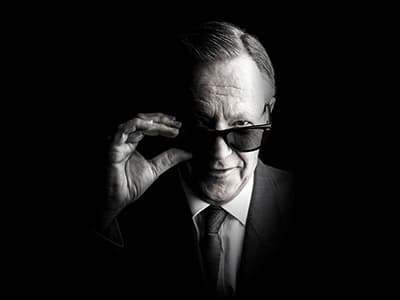
The Gospel According to Paul is meticulously crafted entertainment. It’s uplifting without pulling any punches.

While Bonachela’s work is, as always, dreamily lovely, for me the highlights were absolutely the three commissioned choreographers: Azzam Mohamed, Jenni Large and Raghav Handa.